
How to Search the DeKalb County Court Docket
Start at the county's official DeKalb County Courts and Dockets page. It posts date-specific PDFs for each court. General Sessions civil, traffic, criminal, preliminary, criminal add-on, criminal cost, Circuit civil, and Circuit criminal settings each get their own file. The page works as a calendar hub. There is no interactive name search. Know the case type and the likely hearing date before you dig. The county also posts a caution: online dockets are for information, may change without notice, and are not the official court record.
Gather the full party name, any case number, the court, and a rough filing or hearing date. Local samples follow patterns like 21GS1-2026-CR-####, 21GS1-2026-CV-####, and 21CC1-2026-CR-####. A number beats a name. Similar names and separate court tracks can pull you toward the wrong file.
- Open the county docket hub and select the correct court and calendar category.
- Choose the current date-specific PDF, including any updated or add-on file.
- Match the case number, caption, case type, and hearing date.
- Read the generated time, courtroom, judge, and hearing label together.
- Contact the proper clerk for the official file or a certified copy.
DeKalb County PDF Docket Hub
DeKalb County posts calendar snapshots. There is no permanent public case-history database. The civil docket usually appears by noon the day before court. Preliminary lists show up as available. Criminal settings often follow recurring Thursday patterns. The date on the current PDF controls, so an older filename never proves a setting is still live. Watch for a second file marked “updated” or “add-on.” Save the current PDF and note its generated timestamp. If travel, custody, payment, or a deadline depends on the result, call the clerk and confirm the setting. A downloaded snapshot yields to the courtroom docket and any later signed order.
The county's official docket page lays out the calendar categories you must choose before opening a file.
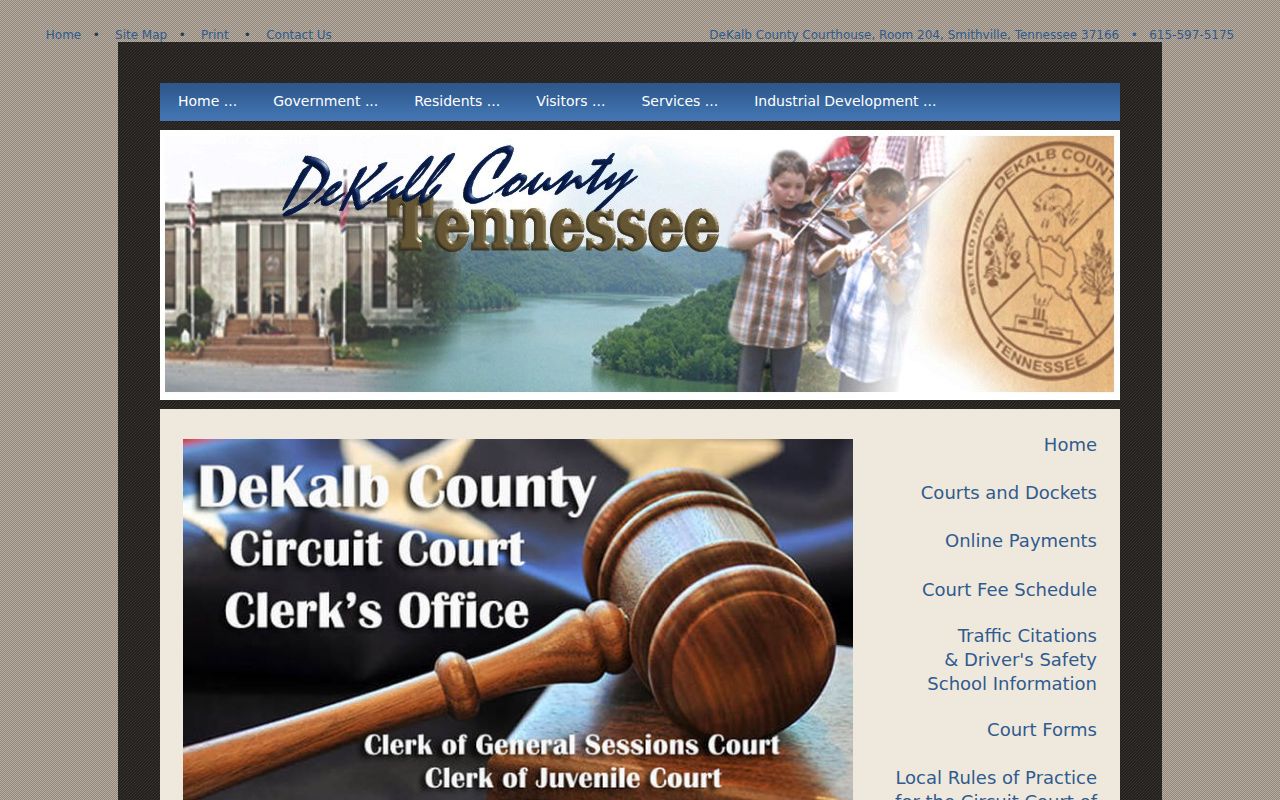
Calendars only: it never proves a listed setting still stands.
What a DeKalb County Court Docket Shows
Each DeKalb County docket PDF is built around a calendar. The header tells you when the list was produced. It also shows the court and room, the hearing range, the case type, and the sort order. Rows can carry the case number, caption, judge, filing or violation date, statute or civil subtype, attorney, bond, comments, and hearing label. Those fields identify a scheduled matter. They do not prove an allegation. Nor do they disclose every document in the official case file.
| Case number | Observed General Sessions and Circuit prefixes identify the local court track and case type. |
|---|---|
| Parties | The caption names the sides; it is not a finding that an allegation is true. |
| Dates | Filing, violation, arrest, generated, and hearing dates have different meanings. |
| Hearing setting | Labels such as Appearance, Cost Review, or Order of Protection describe the setting, not the result. |
| Court and judge | The assignment printed for that calendar should be verified before travel. |
| Comments | Local shorthand should be read as displayed and confirmed with the clerk. |
DeKalb County Case Number Clues
A case number links calendar to file. Locally, GS1 marks General Sessions and CC1 marks Circuit. Suffixes sort the case type: CR for criminal, CV for civil, and TR for traffic in the examples. These are local patterns, not a complete statewide code key.
- Generated
- When the calendar listing was produced.
- Appearance
- A hearing type, not a disposition.
- Preliminary
- An early criminal proceeding, not proof of the charge.
- Add-on
- An additional or later-listed setting that should be checked with the main file.
Use the whole number when you call. If a General Sessions matter moved to Circuit or Criminal Court, ask whether a new number was assigned, and keep the lower-court number handy for reference.
Which DeKalb County Courts Keep Dockets
DeKalb County splits its dockets across several courts. General Sessions takes limited civil claims, misdemeanors when jury rights are waived, traffic matters, and preliminary felony proceedings. Circuit Court is the general-jurisdiction court. It hears General Sessions appeals. A separate Criminal Court handles felony trials. Chancery and the Clerk and Master cover equity, probate, and assigned domestic matters, while Juvenile and municipal records follow separate access rules.
| Court | Docket Covers | Where to Search |
|---|---|---|
| General Sessions Court | Limited civil, traffic, misdemeanors, and preliminary felony settings | County PDF hub and Circuit Court Clerk |
| Circuit and Criminal Courts | General civil jurisdiction, appeals, and the separate felony track | County PDF hub and Circuit Court Clerk |
| Chancery Court | Equity, probate, and assigned domestic matters | Clerk and Master |
| Municipal courts | City ordinance and local citation matters | Smithville or Alexandria city route; verify Liberty and Dowelltown |
DeKalb County Search Has Limits
No statewide trial-court name portal covers DeKalb County. Tennessee Public Case History serves appellate cases only: the Tennessee Supreme Court, Court of Appeals, and Court of Criminal Appeals. TnCIS materials describe web access in participating counties. DeKalb County does not appear on the public list, so it is not a working local lookup.
When no current calendar hit turns up, contact the right clerk by phone, at the counter, or with a focused written request. An appeal is different. Use Public Case History only after a matter reaches a Tennessee appellate court. Federal cases use PACER or a federal courthouse terminal. Each system answers a different question. None replaces the DeKalb clerk's official trial-court file.
Finding DeKalb County Court Dates and Settings
Start with the right PDF. Pick the calendar for the court your case sits in. Then match the date range against the case number and caption before trusting anything. The header holds the true date and time. Rely on it rather than the filename. In DeKalb County, General Sessions civil and traffic matters usually land on Wednesday schedules. Criminal calendars tend to show up on Thursdays. Holidays, resets, special settings, and add-on lists can shuffle that pattern, so treat it as a habit of the court rather than a rule.
One caution worth repeating: a reset is not a dismissal. Lawyers must confirm their assigned judges and docket-setting dates themselves. Motions get scheduled through the judicial assistant under the Thirteenth Judicial District local rules. If a court date or deadline in a DeKalb County docket matters to you, verify it with the clerk. The DeKalb County court calendar guide walks through the full verification sequence.
DeKalb County Clerk Routing
Room numbers matter at One Public Square in Smithville. The Circuit Court Clerk page routes questions about Circuit, Criminal, General Sessions, and Juvenile records to Room 201. That room is reachable at 615-597-5711. The county docket page, meanwhile, lists Room 204 and 615-597-5175 for its General Sessions-facing office. These are separate court functions, so treat them as two doors rather than one counter.
Chancery and probate matters start elsewhere: contact Nicole Wright, the Clerk and Master. Assuming the Circuit counter holds those files will cost you a trip. Municipal citations may stay with Smithville or Alexandria instead. For a Liberty or Dowelltown citation, check with the town itself. Neither town offers a public city docket portal.
The Circuit Court Clerk page shows current contact details. It lists office hours straight from the county.

Its clerk record is authoritative for current routing, fees, and copy procedures.
Public Access to DeKalb County Court Dockets
Tennessee Supreme Court Rule 34 gives the public the right to inspect court public records. Another law, rule, or court order can close them. The Tennessee Public Records Act frames the broader records picture. Tennessee keeps no single statewide repository, though. A request must go to the office holding the item. Looking is generally free. Copies, certification, search labor, and other court services may carry lawful fees.
Key Rules:
Tennessee Supreme Court Rule 34 recognizes access to court public records while preserving legal exceptions.
Tennessee Public Records Act guidance explains custodian requests, inspection, copies, timing, and fees.
Juvenile Rule 114 limits access based on the type of juvenile proceeding and court findings.
DeKalb County Restricted Dockets
Juvenile records are sealed, per the county page. Statewide juvenile rules add some nuance. None of them opens a general public search route. Adoption, judicial commitment, expunged, sealed, and certain order-of-protection information may be missing or limited in a DeKalb County court docket as well. And a missing entry never proves that no case exists.
Local rules force redaction of sensitive data. That covers Social Security numbers, financial account details, driver-license numbers, vehicle identification numbers, biometrics, a minor's full name, and all but the year of birth. A public calendar does not license republishing protected data. Ask the clerk what can be inspected. Ask what gets redacted, and whether a court order or proof of status is required.
The DeKalb County Clerk and Docket Records
Susan L. Martin serves as DeKalb County Circuit Court Clerk. She maintains the Circuit, Criminal, General Sessions, and Juvenile court records the county describes. Her office takes focused requests for inspection, plain copies, or certified copies. State guidance lets a governmental entity require a written request for copies. An inspection request generally cannot be forced into writing. When you write, include the court, the complete case number, caption, date, the exact document, your preferred format, and whether certification is needed.
DeKalb County Circuit Court Clerk
1 Public Square, Room 201
Smithville, TN 37166
615-597-5711
DeKalb County Docket Statistics
The Tennessee Courts FY 2024–25 report offers context, not a live case list. DeKalb Circuit shows 123 civil filings and 105 civil dispositions. On the criminal side, the figures count offenses: 299 filings and 415 dispositions. A count is not always one case or one person. Filings from one year may close in another. Read the numbers as workload, not outcomes.
Numbers like these are why calendars, filings, and outcomes should never collapse into a single measure. The Tennessee court statistics index carries the full report and its definitions.
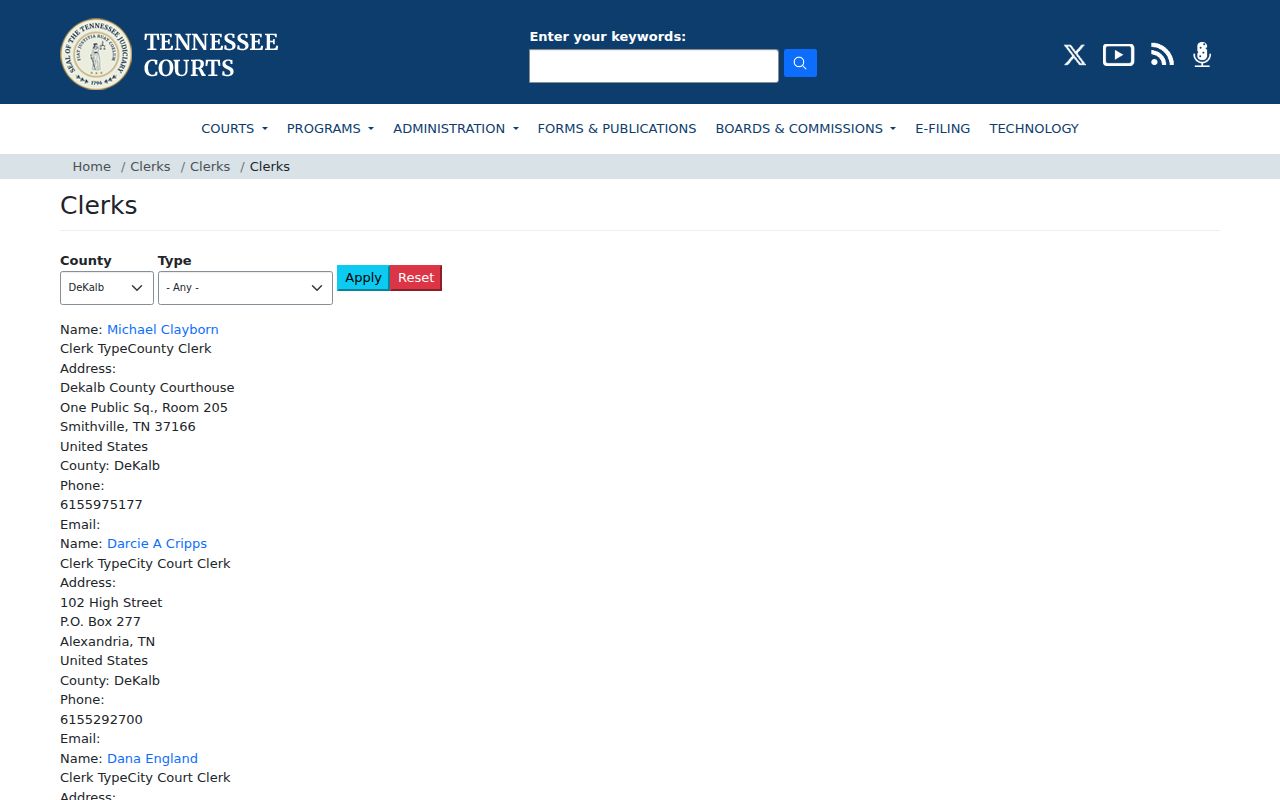
The statewide directory pairs well with those statistics, since it names current official custodians rather than parties in reported cases.
DeKalb County Courthouse Context
DeKalb County dates to 1837. Smithville serves as its county seat. The courthouse on the public square still anchors local trial-court records. Center Hill Lake and local history explain the imagery on the county website. Neither changes which clerk holds a given court record.
For deeper background, the county community-history page collects local material from the county itself.

For docket research, pair that local context with the case number, the correct court, and the current clerk source.
The county header collage blends a courthouse facade, the lake, fiddlers, and the county seal.


It is a community collage, not a verified standalone photograph of a specific courtroom.
DeKalb County Official Directories
County pages go stale, and office labels can confuse. Tennessee Courts directories make a solid cross-check. The AOC DeKalb County listing identifies the Circuit, Criminal, Chancery, Juvenile and Family, and General Sessions courts.
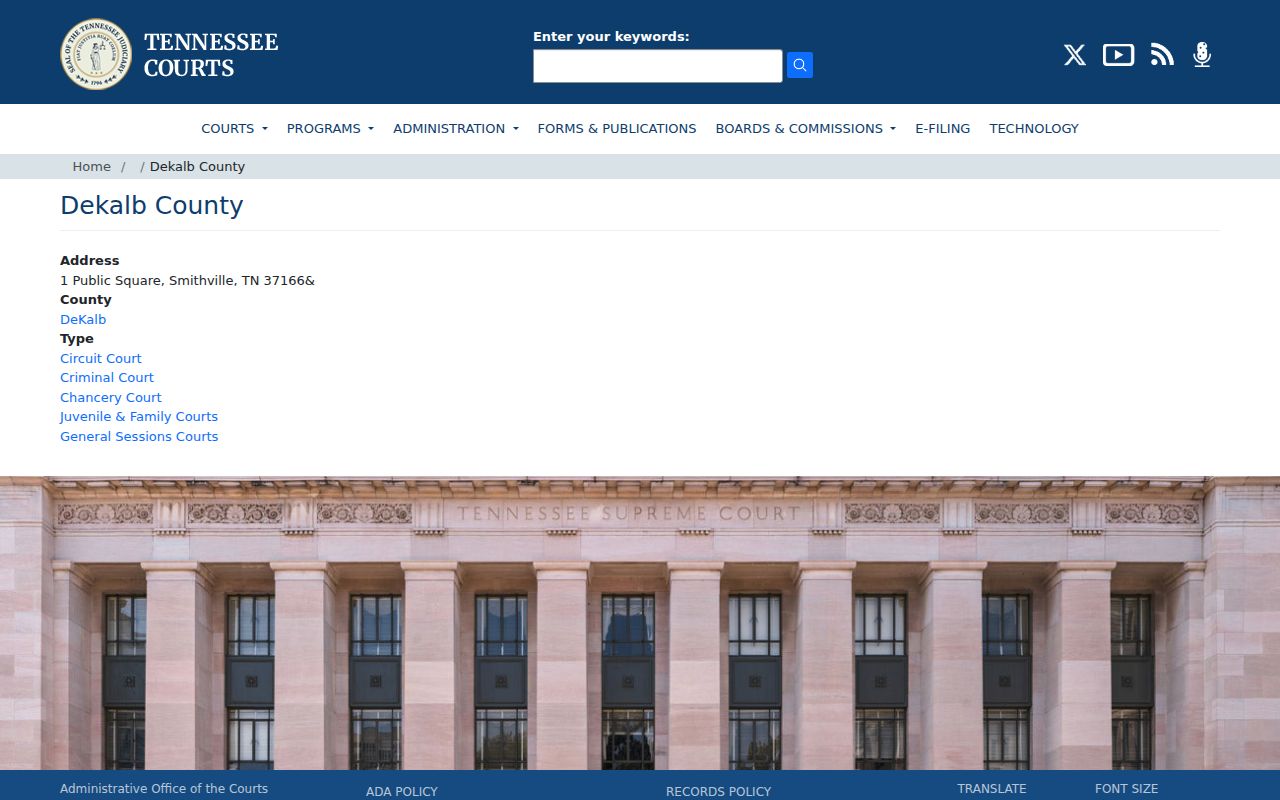
That structure helps route a request, though the local clerk still confirms the specific file.
The Tennessee courthouse directory also places DeKalb at One Public Square.
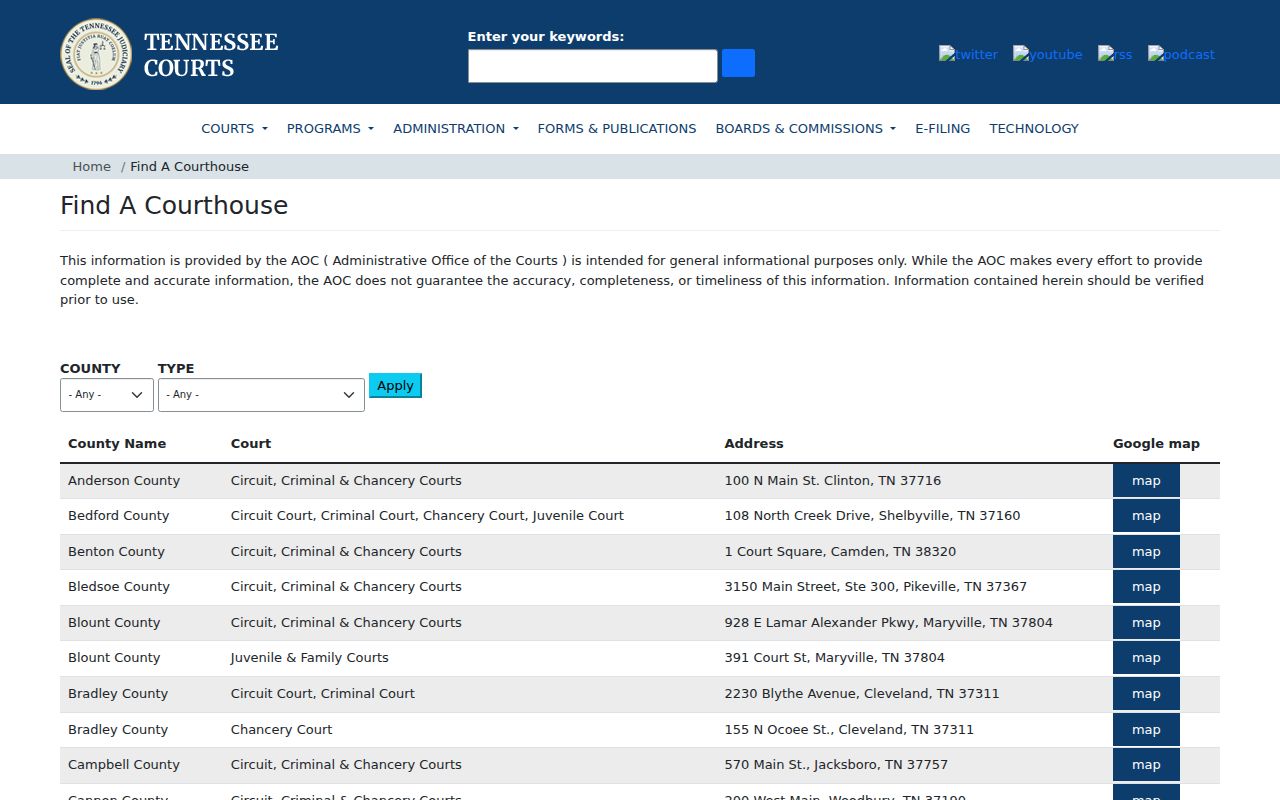
Check both the court identity and room before making an in-person visit.
Court Dockets by City in DeKalb County
DeKalb County has four incorporated places, per the official county list and 2020 Census ranking. Smithville and Alexandria both document municipal court or citation-payment routes. Neither payment tool works as a public case-history search, though. Dowelltown and Liberty have municipal contact profiles. Neither posts a public docket portal. Trace a city citation through its issuing authority and clerk. Then turn to county General Sessions records.
The official incorporated-towns page confirms the complete four-place list.
Note: DeKalb County has no fifth incorporated city, so no placeholder town belongs on this list.
Smithville Court Docket
2020 population 5,004 · Municipal contacts and a payment-only traffic portal.
Alexandria Court Docket
2020 population 981 · Town clerk, code, charter, and citation payment routes.
Dowelltown Court Docket
2020 population 342 · Start with the town because no public portal was confirmed.
Liberty Court Docket
2020 population 334 · Verify the custodian and whether the matter reached county court.
Map and Directions to the DeKalb County Courthouse
Circuit, Criminal, General Sessions, and Juvenile records are kept at the courthouse on Smithville's public square. Circuit Court Clerk Susan L. Martin's counter is in Room 201, while the county page lists a separate General Sessions-facing office in Room 204. Chancery and Clerk-and-Master records route to Room 302, and the County Clerk's administrative office is in Room 205.
DeKalb County Courthouse
1 Public Square, Room 201
Smithville, TN 37166
615-597-5711
Monday through Friday, 8:00 a.m. to 4:30 p.m.
The county's own pages list different rooms and phone numbers for Circuit Court Clerk and General Sessions functions, so confirm the current room by phone at 615-597-5711 before an in-person visit.