
How to Search the Alexandria Court Docket
Pull out the original paperwork before anything else. Look for the agency that issued it, the ticket or case number, the violation date, and the court it names. Alexandria's public pages carry no name-search field. So a town citation points you to the municipal clerk, while a DeKalb County General Sessions or Circuit filing belongs with the county clerk instead.
- Identify the issuing city or agency and the court on the notice.
- Use the ticket number when contacting Alexandria City Court.
- Ask whether the town or DeKalb County holds the case.
- For county court, check the correct date PDF on the official docket index.
- Confirm the setting and requested record with the responsible clerk.
Paying through a vendor skips none of this. When a name is missing from one PDF, scan other dates and add-on files, then ask the clerk.
Alexandria Town Hall Is the Hub
The official Alexandria website is the place to check. It lists Alexandria Town Hall at 102 High Street, Alexandria, Tennessee 37012. The main phone is 615-529-2171, and weekday hours run 8:00 a.m. to 4:30 p.m. The site also posts a fourth-Tuesday town meeting at 7:00 p.m. That calendar is civic, not a municipal court date. The town page itself shows these details.
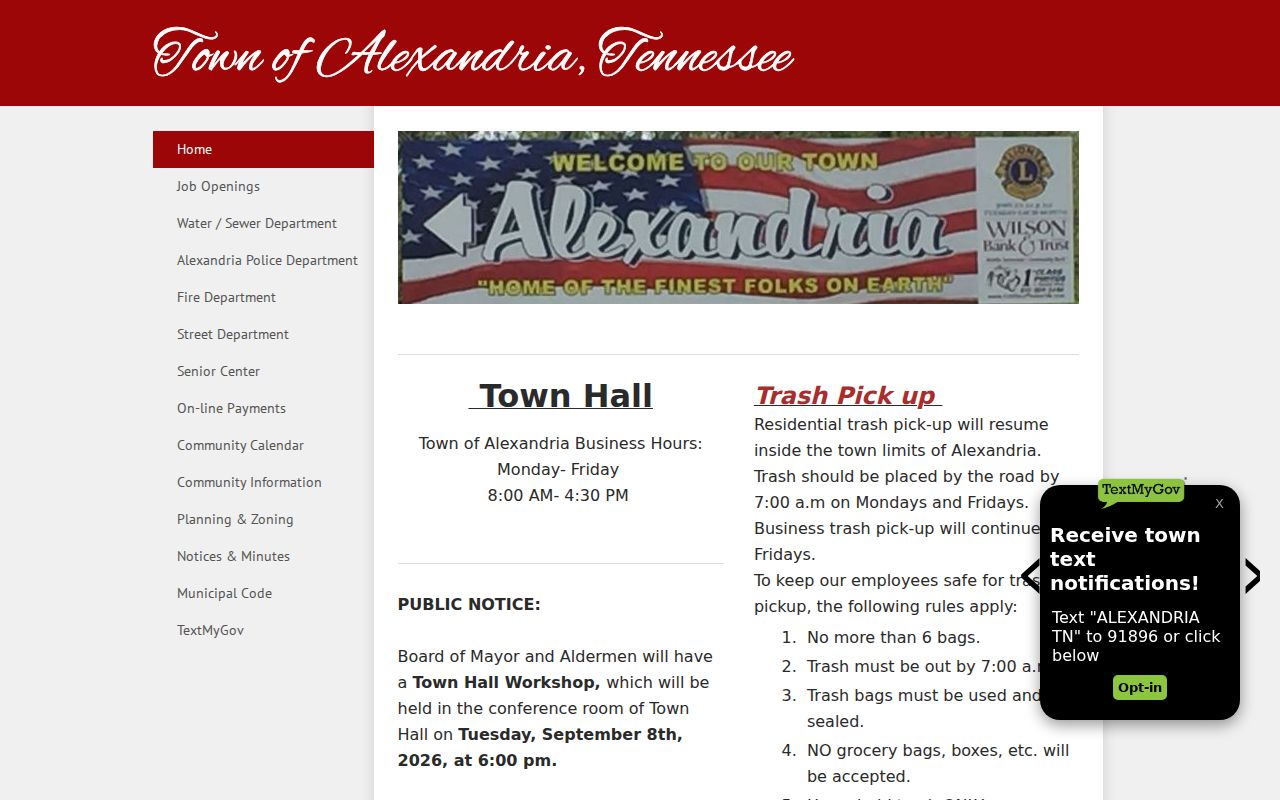
Town Hall staff can tell you which Alexandria official keeps a city citation or municipal record. For a DeKalb County trial-court case, though, the county clerk remains the right office.
The Alexandria Municipal Court
Alexandria's charter sets up a town court under an appointed Town Judge. Ordinance violations carry a maximum $50 fine under that charter. The current charter, code, court order, and clerk control on any live question. A summary of the ceiling does not. The AOC directory names Darcie A. Cripps as Alexandria City Court Clerk. The address is 102 High Street, P.O. Box 277, Alexandria, phone 615-529-2700. Treat that listing as a lead. Confirm it through Town Hall. The charter also puts public records in the Town Recorder's hands. Copies and certifications are charged under fees the town sets by ordinance.
Alexandria Code Changes Twice Yearly
Alexandria updates its code twice a year. The municipal code page says revisions land in June and December, and a modern online format is on the way. Until then, read the posted code documents. Ask Town Hall if a later ordinance changed the text you found.
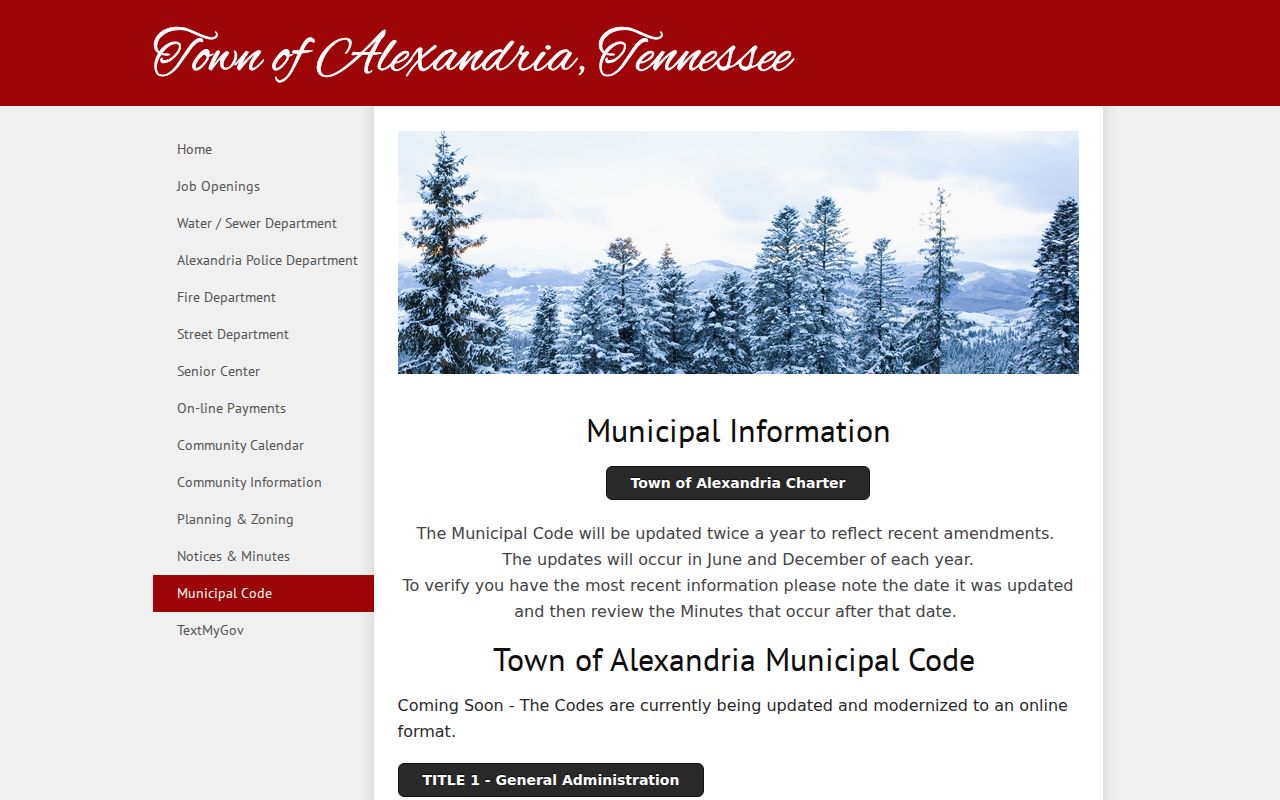
The code gives ordinance context for an Alexandria docket entry. It cannot prove that a case was filed, or how it ended.
Alexandria Court Dates and Settings
Trust the date printed on your citation or official notice first. Then confirm it with the current city clerk. A county setting needs the newest date-specific DeKalb County PDF plus a call to the Circuit Court Clerk. A town meeting calendar tells you nothing about court schedules.
| Date | The appearance date stated on the citation or current court notice. |
|---|---|
| Time | The listed appearance time, subject to current clerk confirmation. |
| Court | Alexandria Town Court or the named DeKalb County court. |
| Ticket Number | The primary locator for a municipal citation. |
| Issuing Agency | The clue that helps decide whether the town or county route applies. |
Ask whether an amended notice, rescheduled setting, or later order now controls. A portal receipt never proves an appearance date moved.
Alexandria Adopted Electronic Citation
Among the town's official notices is a 2025 electronic-citation resolution. Electronic citation moves ticket data from the issuing agency into the municipal process more smoothly. It still does not give the public name search people hope for. It does not create online docket access either. The Alexandria notices and minutes page also posts a 2025 court-cost resolution and a 2024 amendment to Title 15. Review it there.
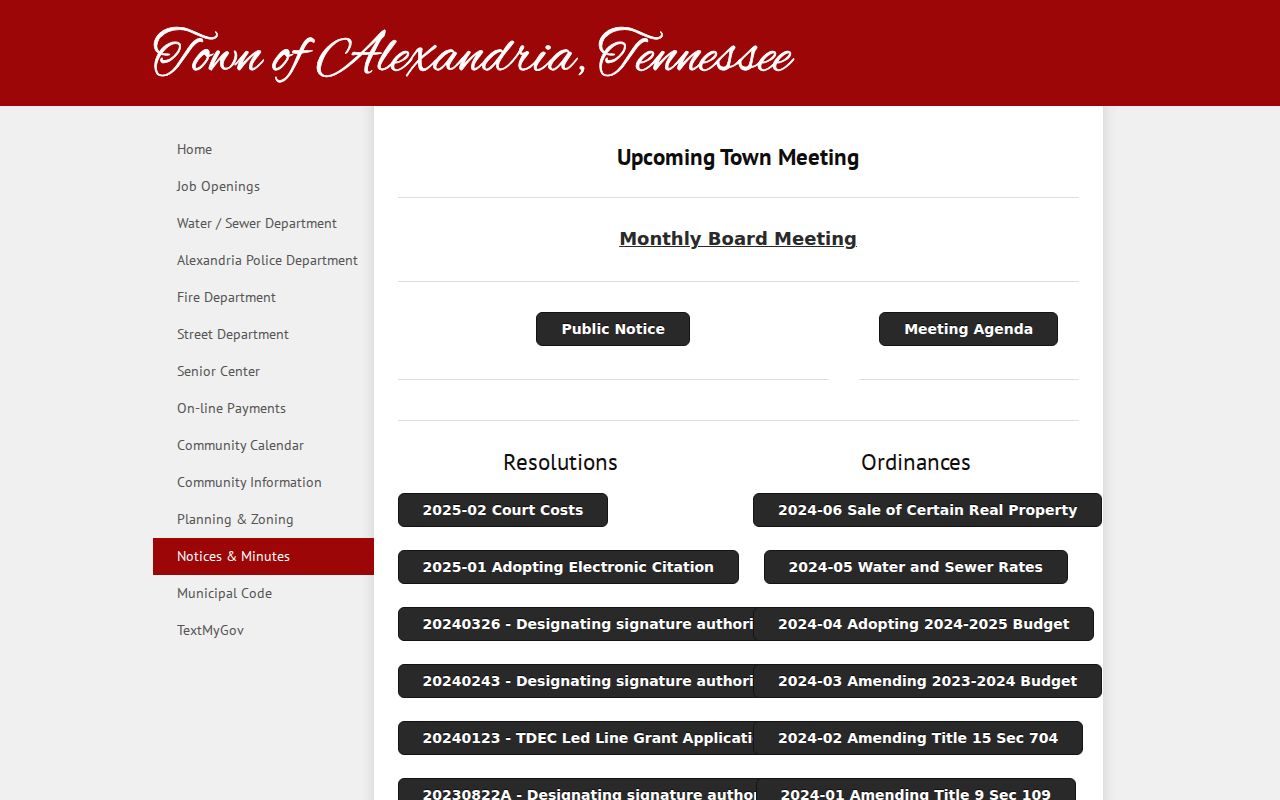
Dated reforms like these make the current clerk your best contact. Verify any new citation workflow, court cost, or traffic rule before paying or appearing.
Alexandria Traffic Tickets
Traffic and parking rules live in Title 15. It covers civil citation penalties, parking deadlines, and what happens on a failure to appear, which routes to the Tennessee Department of Safety under cited state law. Use the code as background. The citation and current court record decide the actual matter.
| Need | Alexandria route | County alternative |
|---|---|---|
| Find a city ticket | Ticket and City Court Clerk | Ask issuing agency if transferred |
| Pay a known citation | Town-linked payment page | County vendor only for county matters |
| Confirm a date | Citation and current city clerk | County PDF and county clerk |
| Get a judgment | Town record custodian | Clerk holding the county case |
Not every citation written in Alexandria lands in one county docket. The issuing agency and court name tell you where to ask first.
Alexandria Payment Is Not Docket Access
Alexandria's payment page bundles property tax, water bill, and citation payment options together. The town posts no docket-search fields there. Identify the correct citation first, and understand what payment means legally. Only then use the official Alexandria online-payments page.

Those separate payment categories show why a vendor result is not an Alexandria court docket. It is no substitute for a certified municipal record.
Where Alexandria Cases End Up
A town ordinance or municipal citation can stay in Alexandria's own court. State-law traffic and misdemeanor matters may belong in DeKalb County General Sessions. A felony can start there as a preliminary matter and move to Criminal Court later. Tennessee law sets where appeals and everything else go.
Alexandria Town Court → DeKalb County General Sessions → Circuit or Criminal Court is one possible flow. It is not a promise that every municipal matter transfers. Ask the clerk where the exact case was filed.
The county Circuit Court Clerk sits at One Public Square, Room 201, Smithville, phone 615-597-5711. For General Sessions questions, the county docket page lists 615-597-5175. The DeKalb County case-search route walks through the full county PDF process.
Alexandria Records Have Two Custodians
The Town Recorder's charter duty covers municipal public records. That includes copies and certifications at town-set fees. For a city-court docket or citation, the listed City Court Clerk is the more direct lead. Confirm which office holds what. Neither role collapses into the DeKalb Circuit Court Clerk's separate county jurisdiction.
- Use the ticket number and issuing agency.
- Name the exact docket, judgment, or payment record sought.
- Give the violation and court dates.
- Choose inspection or a copy.
- Ask whether certification and a fee apply.
Keep your Alexandria records request narrow so staff can find the right file fast. Leave out sensitive details you do not need; staff can hand over records and process facts, but they cannot pick a legal strategy for you.
Alexandria Population and Access
Alexandria counted 981 residents in the 2020 Census. TACIR projects 1,080 residents for 2025, and that figure is a projection rather than a count. Neither number says anything about cases, defendants, or the size of the Alexandria court docket.
The Alexandria MTAS profile shown below provides municipal population and contact context.
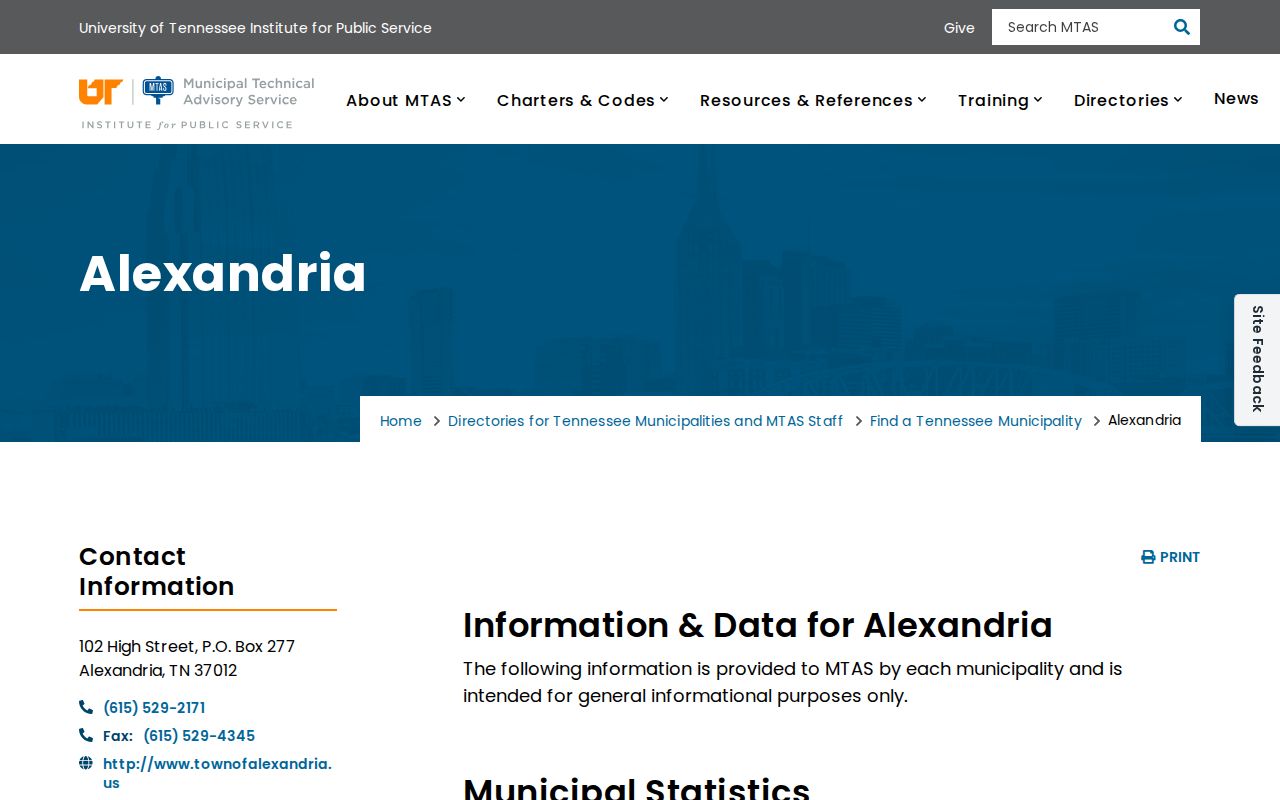
It confirms the town, not a case or its result.
Public Access to Alexandria Court Records
Start with whichever office actually holds the record. City dockets and citation records stay with Alexandria itself. County trial-court files belong to the DeKalb clerk. A written copy request works best when it lists the ticket or case number, the caption, the date, the exact item, the format, and whether certification is needed. Ask about fees before processing begins.
An Alexandria municipal record that is not clearly assigned to City Court can start at Town Hall. That is where the Town Recorder's charter role applies. The listed City Court Clerk directly handles a docket, judgment, or citation. If the line between the two is unclear, ask either office to route the inquiry. You can request inspection, a plain copy, or certification. These are different services that may carry different costs. The custodian does not have to build a custom report or settle a legal dispute. Nor must the custodian explain what a code provision means for you.
Tennessee Supreme Court Rule 34 guarantees access to public court records while preserving exceptions. Juvenile, sealed, confidential, or expunged cases may be withheld or absent. Even released records can carry redactions for protected identifiers.
Tennessee runs no single central public-record repository. The Tennessee Public Records Act instead sends you to the custodian who keeps the requested item. Inspection is generally free unless another law allows a charge. Copies can bring page, labor, clerk, or certification fees. The statutory access right is framed for Tennessee citizens. If you live elsewhere, ask Alexandria which access method it offers. A prompt reply may still be just an acknowledgement. It may be a lawful denial rather than immediate production.
Access boundary: A public Alexandria setting does not authorize disclosure of protected personal data or access to a sealed file.
Redaction can strip out Social Security numbers, financial account data, driver-license numbers, and vehicle identification numbers. It can also mask a minor's full name. Even the birth date may be cut back to the year alone. So parts of an open Alexandria record can stay masked. Request only what you need. Never republish protected data from an under-redacted file.
If access is denied, ask which law, rule, or order applies. Also ask whether a review route exists. An empty online docket search does not prove a hidden Alexandria case.